The extrusion process involves turning a billet of heated aluminium into a profile by forcing it through a shaped steel die, a bit like creating pasta, where the dough becomes spaghetti, bucatini or rigatoni depending on the brass die it's pushed through. The shape of the die is what defines your cross-section, so most of the important decisions happen before any metal moves: the geometry, the alloy and temper, and the tolerances the profile needs to hold. Once those are settled, the same profile can run from a handful of prototype lengths to full serial production, with fabrication, finishing and packaging added downstream.
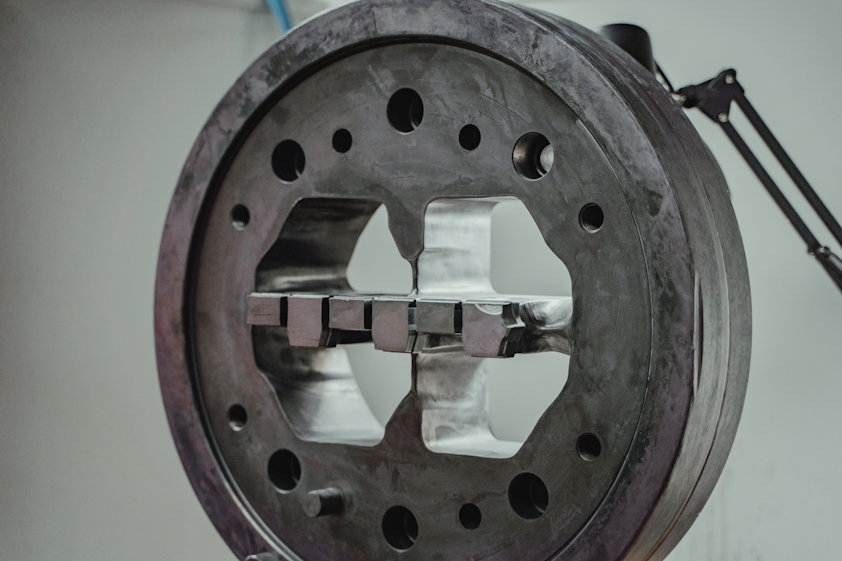
Example of an extrusion die
What you can share for us to quote your profile
- A drawing or CAD model
- Preferred alloy and temper, if you have one
- Tolerance requirements, especially on critical dimensions
- Finish requirements
- Any fabrication or assembly steps
- Packaging needs
Share your idea
Material and process expertise
The alloy and temper you choose is one of the biggest levers on how a profile behaves. The 6xxx-series alloys are the workhorses of extrusion because they balance strength, corrosion resistance and the ability to flow into thin, complex shapes. The 7xxx-series alloys reach much higher strength but are harder to extrude and more sensitive to corrosion, so they tend to be reserved for structural parts that need it. Temper, the controlled heat treatment after extrusion, then sets the final hardness.
Key considerations when designing with extruded profiles
Good extrusion design starts with the requirements that drive your part, such as the loads it carries, how it joins to other parts, the environment it sits in, the finish it needs and the cost target. The reason design choices matter so much is that the press has limits. Thin walls, sharp corners and uneven thickness across a section make the metal flow unevenly, which forces a slower press speed or thicker walls to compensate, and that can add cost and weight. A profile drawn with those limits in mind extrudes faster, holds tighter tolerances and needs less machining afterwards. If you would like go more in-depth about extrusion design decisions, join one of our upcoming profile academies.
Education in extruded aluminium design
Designing with aluminium states your intent to produce a great product with a strong, light, durable, environmental and design-friendly material. Increased knowledge is driving the use of aluminium, and we are proud to have educated thousands of customers in the use of aluminium in our Profile Academies.


